

Why an insurer wanted a flat roof report
This one started with the customer's insurance company. Insurers don't like flat roofs, and they sometimes ask for a condition report before they'll take on the risk of water getting in. The owner needed a roofer to look at the roof and put its condition in writing.
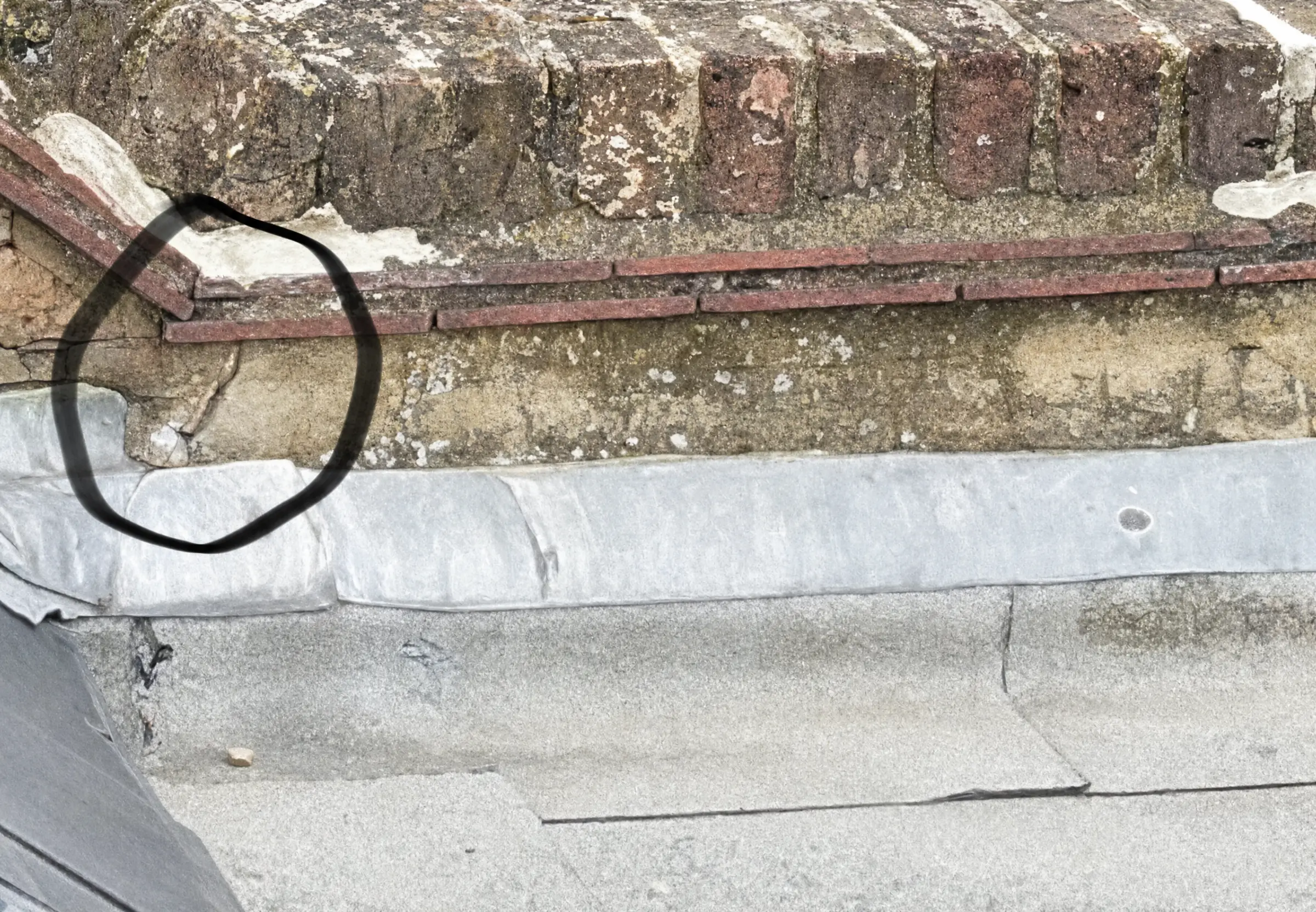
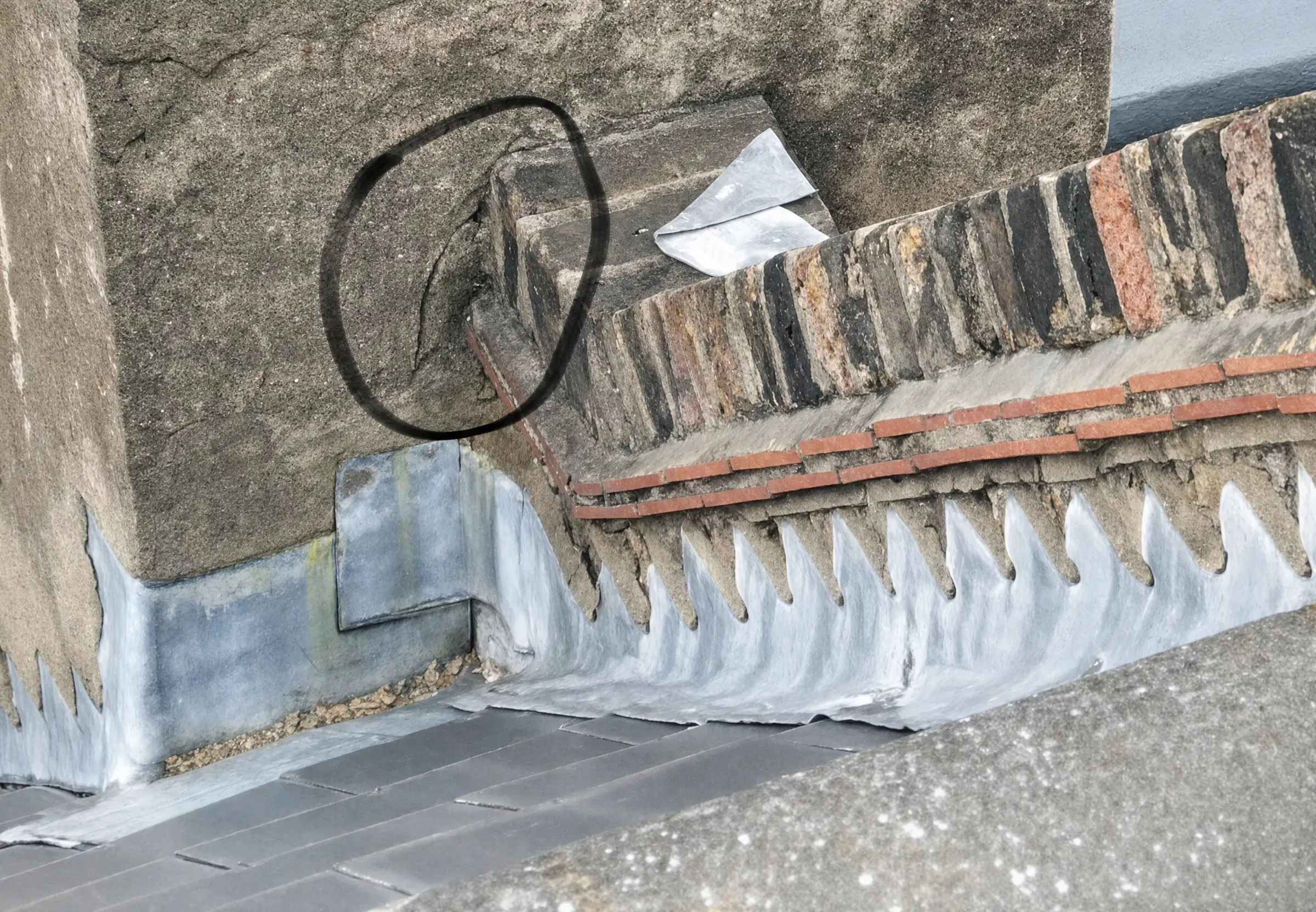
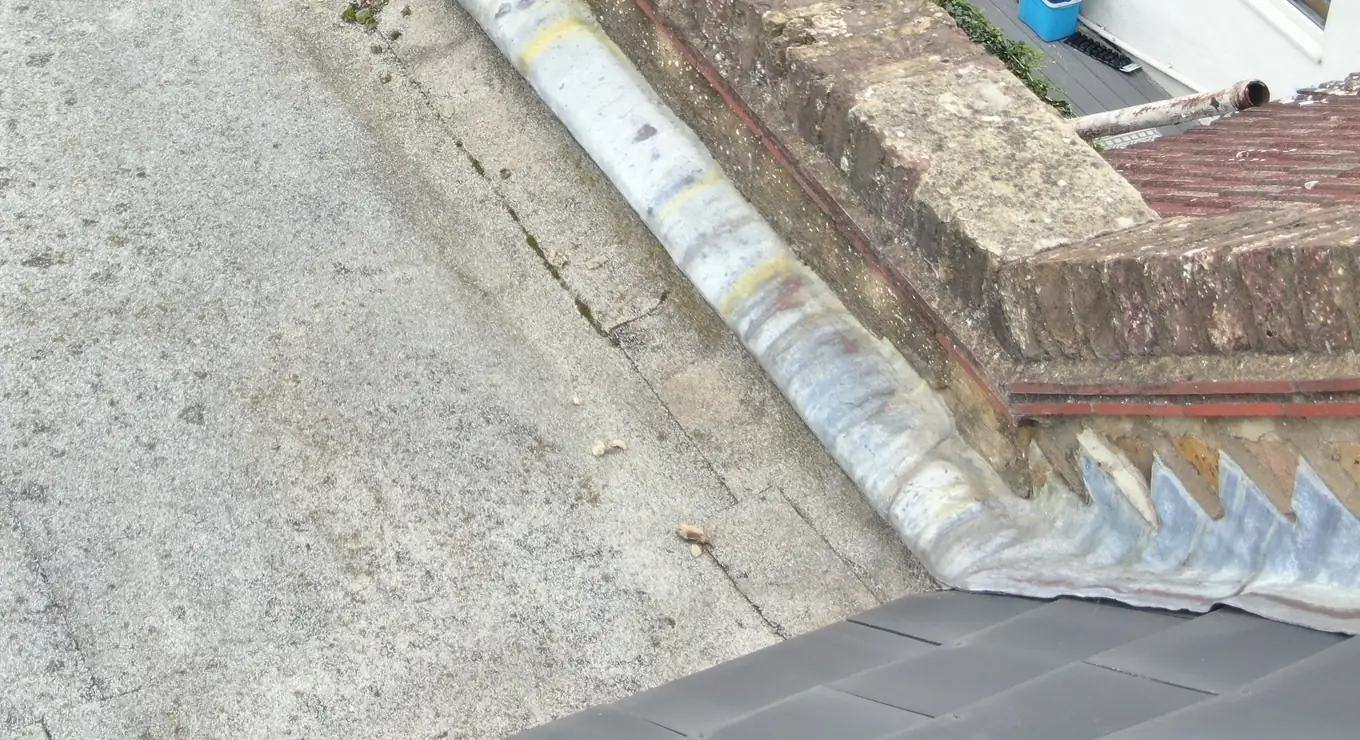
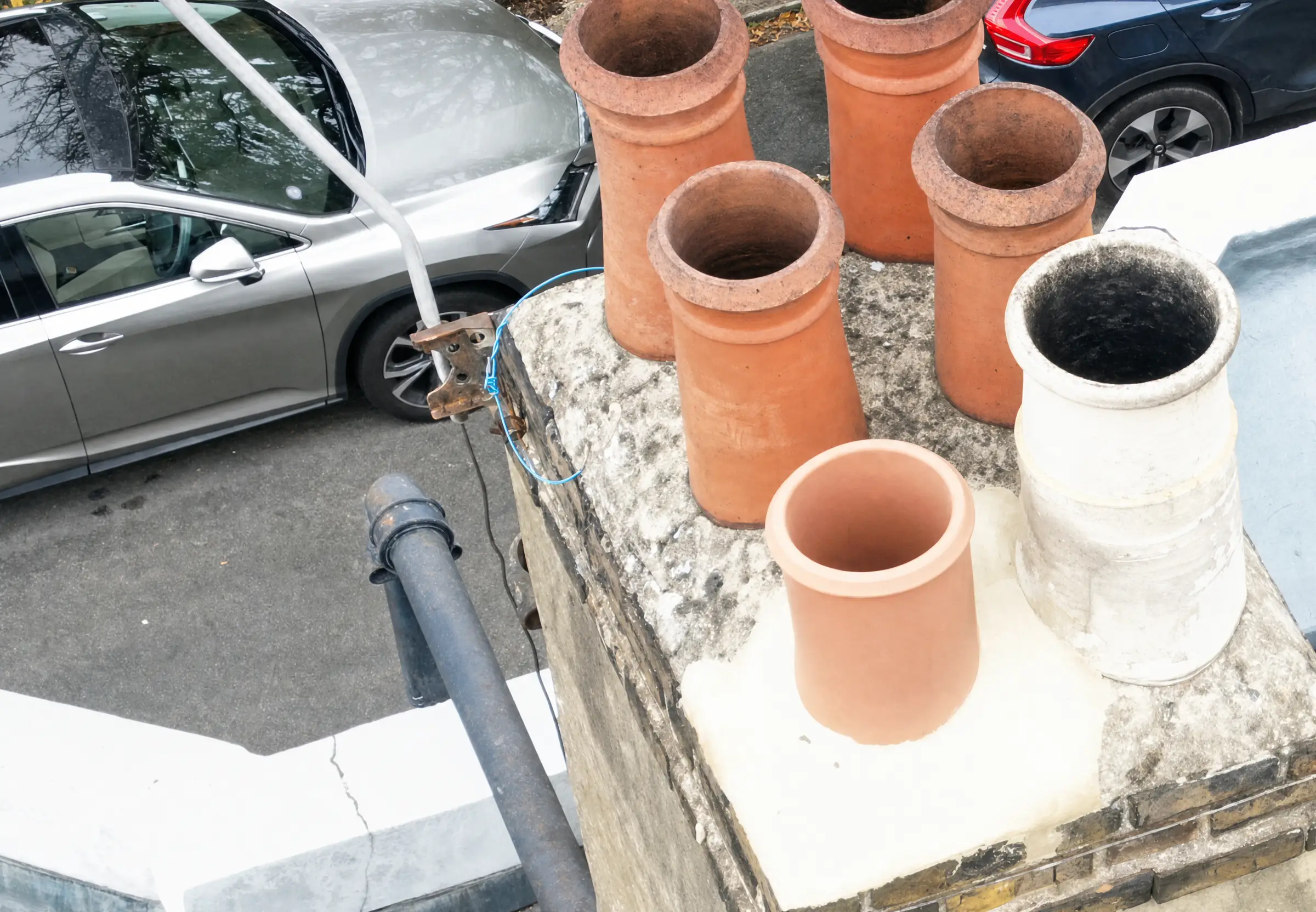
On 12 and 13 October 2026, Steve flew the drone over the property to survey the chimney stack and pots, the lead flashings where the chimney meets the parapets, the lead below the brick parapets, and the slate slopes. Each defect was circled on the photographs, so the owner could see exactly what needed doing before anyone went up.
What the drone found
The good news first: the felt on the flat roof was still serviceable, so it didn't need replacing. The problem was the parapet walls along the sides. The bricks laid on edge along their tops had spalled, with their faces flaking away, and left alone that lets water into the wall and gets steadily worse.
There were smaller items too: three fibre cement slates to re-secure, a soil pipe to extend and cap, chimney pot covers, a little repointing of the flashing at the base of the chimney, and moss to clear from a step flashing.
The fix: parapet render, and the insurer's sign-off
The parapets needed render over the spalled brick-on-edge and the wall above the flashing, both to stop the damage spreading and so Steve could confirm the roof's condition as acceptable to the insurer. John was on site doing that work on 22 October 2026, working from a scaffold tower. Once it's finished, the customer gets a written condition statement to send to their insurance company.
Why brick-on-edge parapets spall
A parapet is the most exposed brickwork on a house. It stands above the roof line with weather on both faces and on top, and the bricks laid on edge along its top take the rain straight on. Water soaks into them, freezes in a cold snap, expands, and pushes the face of the brick off. That's spalling.
Once the hard outer face has gone, the softer brick behind it soaks up even more water, so every winter does more damage than the last. Left long enough, the water finds its way down inside the wall and into the house below. Render over the top stops the water getting in. More on the brickwork and lead round a roof on our chimneys and lead work page.
A drone survey first, and only the work that was needed
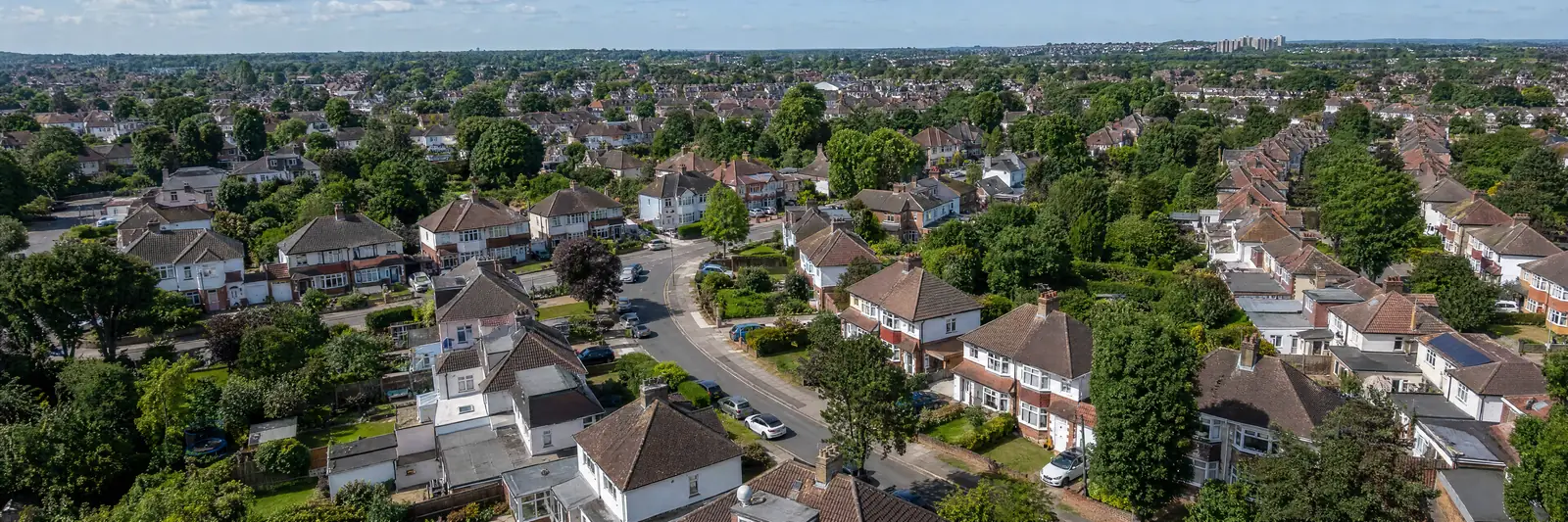
Shooters Hill is a little outside our usual areas, and that's where a drone earns its keep. Nobody had to climb on the roof to see the parapets, the chimney or the lead, and the owner got photos with every defect circled. See our drone roof surveys page for how it works.
It also meant we could say with confidence that the felt was fine. A flat roof report for an insurer can easily turn into a quote for a new roof. This one didn't need one, so we didn't quote for one: the parapets and the small items were the whole job. More on flat roofing and roof repairs.